


Have you ever tried to tell the difference between a human-written text and an AI-generated one? Finding the difference between human-written and AI-generated texts can be a daunting task.
The rise of AI writing tools has blurred the line so much that more than half of us can't even spot the difference. The magic lies in something called 'natural language processing' - sounds fancy, right?
This brings us to our main focus: AI Content Detection: Should Your Business Care? We'll look into how these clever little content detectors work, their flaws (yes, they're not perfect), why humans still play a crucial role, and if you need to worry about the content you create for your business being AI-detectable.
We have plenty in store for you – from understanding probability-based algorithms behind detection tools to exploring real-world instances where they faltered. So, let's talk about everything you need to know about AI detection for your business!
Heads up! If you click on some of the links around here and decide to make a purchase, we might get a little thank-you commission. Don't worry, it won't cost you a penny more, but it does give Local AI Academy a high-five for our honest reviews. Your support means the world to us!
The Rising Importance of AI Content in Digital Marketing
With the advancement of technology, artificial intelligence (AI) is rapidly becoming a game-changer in various industries. This holds true for digital marketing as well. Top-notch content has always been a key factor in successful digital marketing plans. But today, there's more to it - AI-generated content.
The fusion of artificial intelligence with machine learning has created innovative tools that can create human-like text, blurring the lines between human-written and machine-generated work.
The Evolution of AI Writing Tools
In the past decade, we've seen a significant evolution in how we produce online content. Thanks to advances like language models such as GPT-4 and BERT from Google, creating compelling narratives has become an easier task than ever before.
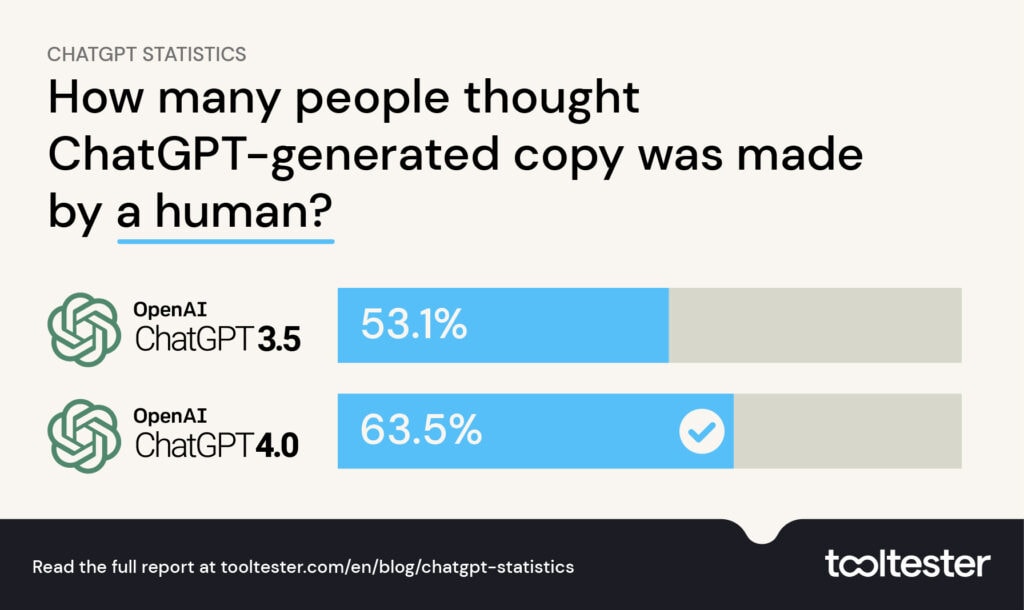
A few years ago, using bots for writing was almost unthinkable due to their lackluster output quality. However now? It’s all changing at an alarming pace. Over 53% of Americans surveyed couldn't accurately differentiate between ChatGPT output and genuine human writing, and those numbers were before ChatGPT received its new GPT-4 update – quite astonishing, isn’t it?
This tells us two things: one - AI is getting good; very good indeed at mimicking our style. And two – if you’re not already utilizing these marvels, like GrammarlyGO, within your business operations, you may miss out on some valuable opportunities.
The Impact of AI on Various Industries
Beyond just producing high-quality written material, however, lies another profound impact stemming from implementing advanced artificial intelligent systems across different sectors: they're making everything smarter by understanding context better than ever.
AI is not only revolutionizing digital marketing but also a wide array of other sectors. AI tools can analyze vast amounts of data and generate insights that humans would take days to comprehend, making them incredibly valuable in industries like healthcare, finance, and logistics.
AI's capability to gain knowledge from prior encounters renders it a formidable ally. It can boost efficiency in every corner of your business operations, truly proving its worth.

The Imperfections of AI Content Detectors
AI content detectors are a fantastic tool in the world of digital marketing. But, like any powerful technology, they're not without their shortcomings.
The Science Behind AI Detection
Underneath the hood of each AI content detector, you'll find a complex blend of probability-based algorithms and natural language processing techniques. These AI detection tools analyze written content to spot patterns that might indicate another machine generated it.
A well-tuned AI detector should be able to pick up on these subtle signs and provide an accurate assessment. But there's always room for error due to factors such as training data quality or algorithmic biases.
This can lead to false positives where human-written text is flagged as bot-generated or vice versa. It’s similar to having a smoke alarm that goes off every time you make toast - sure, it's better than missing a real fire, but all those false alarms can get pretty annoying.
Real-Life Instances of Detection Errors
Detection errors aren't just theoretical problems; they also have tangible impacts on our everyday lives. Take plagiarism checkers, for example – many use similar detection tools underpinning most AI detectors' work today.
In fact, according to research conducted by Stanford University, people could only tell when something was written by an artificial intelligence about half the time - even after being informed about the possibility of AI-generated content.
So, despite our best efforts to detect AI-written material accurately, we're still at a point where tossing a coin might give you almost as good odds. It's evident that further effort is necessary in this field.
The line between human and AI-generated content is blurring! A Stanford study shows humans are only about 50-52% accurate in detecting AI-crafted text. 🕵️ #AIDetectionChallenge #TechInsights
The Unintended Consequences of AI Detection Algorithms
False positives in AI detection can lead to unintended consequences, a reality that has notably unfolded in the academic sphere. For instance, a group of university students found themselves in hot water when accused of leveraging AI for their assignments. The culprit? AI detectors mistook their original work for machine-generated content.
As Rolling Stone reported, this scenario uncovers a layer of complications that come with the territory of AI content detection. When the line between machine-generated and human-crafted content gets blurry for AI detectors, the stakes get notably higher, especially for the accused. The ripple effects extend beyond an unfair accusation; it can instigate a whirlwind of skepticism, stress, and stigmatization for the students involved.

The Implications of AI Detection on Created Content
While the realm of academia has its own set of challenges with AI content detection, the business arena plays by a slightly different set of rules. Unlike a professor accusing you of AI-aided shenanigans, here the jury comprises your customers, and the judge is the mighty Google.
So, does AI-generated content get a thumbs up or a side-eye from them? Let’s discuss further.
Google's Green Light on Quality AI Content
According to a discussion by Search Engine Journal, Google doesn't frown upon the use of AI in content creation, provided the result is high-quality, valuable content that enhances its search results. So, if an AI is helping you craft engaging, informative content that adds value to the readers, you're in the clear. It's all about maintaining a standard of quality that resonates with the search engine's algorithm and serves the user's intent well.
Customer Perception: A Thin Line to Tread
On the flip side, your customers' perceptions could be a tad different. A study highlighted by Cornell University underlines the potential social cost of using AI in conversations.
If your content feels robotic or lacks that human touch, it may lead to a negative perception. The last thing you want is for your audience to feel disconnected, assuming a bot drafted the content they're reading. It's about preserving that human connection even when leveraging AI tools for content creation.
The Path Forward for Businesses
Both Google and your audience are looking for high-quality content, not a jumble of words spat out by a machine.
You're on a safe track if you're willing to invest time refining AI-generated content to ensure your content meets a higher standard. This effort also aligns well with better SEO and enhanced customer engagement.
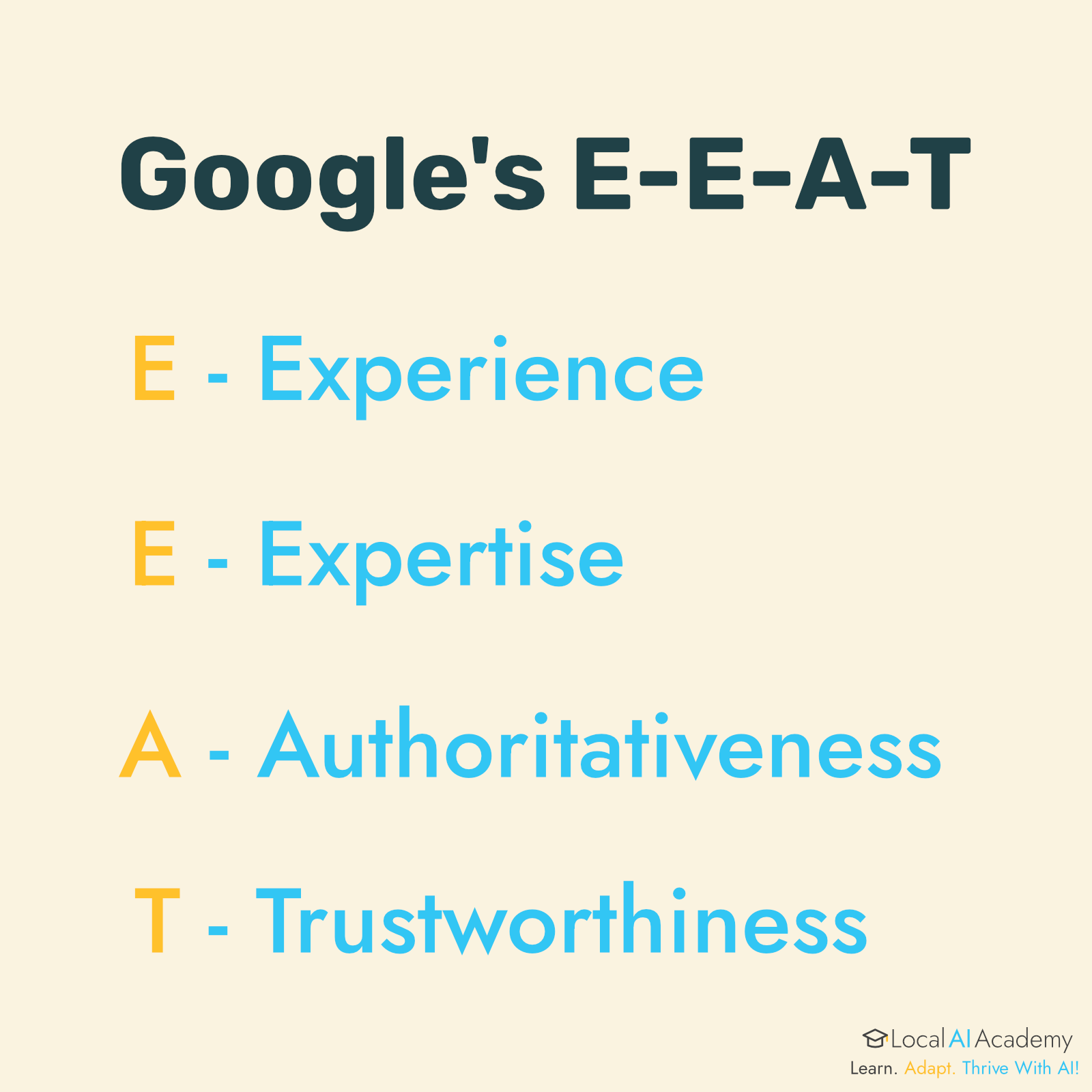
The golden rule? Create content for users, not search engines and Adhere to the E-E-A-T (Experience, Expertise, Authoritativeness, Trustworthiness) principles as Google’s guidelines outline when shaping your content.

Combining Artificial Intelligence with Human Expertise
Combining AI and human expertise can create something unique that retains the essential human touch. We get to leverage the benefits of AI programs while attempting to maintain that essential human touch with our edits and experiences.
Maintaining the Human Connection in Content Creation
AI tools are incredible at processing vast amounts of data quickly and accurately. They've made our lives easier in many ways, but they lack one crucial thing: The uniquely human ability to understand emotion and context beyond raw data.
This is where professional writers come into play. Their deep understanding of language nuances, cultural references, and emotional subtleties brings richness to written content that AI still struggles to match.
Even though AI has gotten increasingly good at mimicking human creativity, there's always an underlying "feel," a certain warmth or familiarity that makes genuine human-written content stand out.
The Role Of Human Oversight In AI Content Generation
An effective way businesses ensure quality control over their AI-generated output is through stringent oversight by skilled professionals who act as gatekeepers for ethical standards within their organization.
The role these experts play is two-fold: First off, they make sure no plagiarized content slips through unnoticed - plagiarism violates not only legal norms but also carries serious ethical implications for any business involved in content generation. AI detectors work great in identifying duplicate content, but they could be better and sometimes require a human eye to catch subtleties.
Secondly, these experts also add their own flavor to the mix. By tweaking and refining generated text using their writing style, they can make any piece of AI-generated content sound more like someone wrote it in its entirety.
Here are just a few ways skilled human writers can help improve AI-generated content in ways that AI currently can't;

Persuasiveness
A well-crafted persuasive argument often requires nuanced language skills and emotional intelligence – areas where humans still outperform machines.

Creativity
While algorithms can generate grammatically correct sentences based on patterns learned from large datasets, they cannot think outside the box or create truly original ideas.

Sensitivity
AI can sometimes miss cultural nuances or sensitive topics, leading to content that could potentially offend your audience.

Expertise
As a local business owner, you have a wealth of knowledge and personal experience about your industry and the nuances that impact your community.
This collaboration between artificial intelligence technology and humans has led to some fascinating advancements within the digital marketing sphere. We can now produce high-quality content at scale without losing that personal touch, which makes all the difference when engaging with audiences online.

The Challenge of Detecting AI-Generated Content
It's becoming increasingly difficult to differentiate between material composed by a human and that produced by an AI system as artificial intelligence progresses. A surprising statistic shows that 62% of linguistic experts couldn't tell if a bot wrote content created with GPT-4. This raises questions about how effective our current detection tools are.
The Intricacies Behind Content Detection
Detecting AI-generated text is no simple task. The most powerful tools we have today for this purpose are called content detectors or plagiarism checkers. But here's the thing: these detectors work based on specific algorithms, which might not always be accurate.
To give you an idea, imagine having two almost identical pictures but with minor differences so small they're hard to spot with the naked eye. That’s pretty much what happens when comparing human and machine writing styles - subtle nuances make all the difference.
This problem is further complicated because advanced language models like ChatGPT often mimic natural language processing techniques humans use – making them increasingly adept at generating content indistinguishable from that produced by professional writers.
The Increasing Sophistication of AI Content Generators
AI is always on the move, with companies like Content at Scale pouring a lot into creating their own intelligent AI writing tools. These tools are all about blending a human touch in writing with the knack for whipping up long blog posts. It's not just about pumping out text; it's about making content that hits home, even when the talk goes long.
With AI content creators getting better, telling apart AI-made content from what a person wrote is turning into a tough nut to crack. The upgrades by tools like Content at Scale are kind of setting up a tech showdown. On one side, we've got sharp AI tools working to craft content that's hard to flag. On the other, we have AI detection tools hustling to spot this new type of AI-made content.
This back-and-forth shows how fast AI moves and highlights the roadblocks AI detection tools run into. The more AI-made content looks like it was penned by a person, the harder it gets for detection tools to tell what's what. As AI content creators aim to mimic human writing more closely, the game of catch-up for detection tools just gets more challenging.
Quick Overview Content at Scale
Quick Overview - Content at Scale
AI Tool Type
Text Generation
Starting Price
$49 Per Month
Learning Curve
Intermediate
Primary Use
Blog Post Creation
🎉 Bonus
Get 20% More Post Credits When You Sign Up With Our Link!
Get 20% More Post Credits When You Sign Up With Our Link!
Facing False Positives & Negative Rates in Detection Tools
In trying to detect generated text versus authentic writing, one key challenge lies within false positive rates – where genuine human-written pieces get flagged as being produced artificially due to similarities in writing patterns or styles.
Imagine being wrongly accused of cheating during a game because your moves resemble those made previously. It can be equally frustrating for creators whose original works get mistaken as plagiarized merely due to coincidental resemblances.
On the flip side, a false negative rate is when AI-generated content passes undetected through these systems. Think of it as an impostor blending perfectly into a crowd - that's what we're dealing with here.
Frequently Asked Questions
AI detection plays a key role in maintaining content integrity and preventing the spread of misinformation and fake news while ensuring transparency in digital communication.
For content creators, they are helpful tools to let them know when AI-generated content might sound too robotic and needs attention during editing to sound more relatable.
AI Content Detectors analyze text to spot patterns typical of AI-generated content, using machine learning to improve over time. They examine grammar and sentence structure and compare text to known AI writing models like GPT-3 or GPT-4. Some also check text against databases of human-written content.
While not foolproof, they help differentiate between human and AI-created content, aiding in maintaining content authenticity in the digital realm.
The detection accuracy of AI content detectors varies. They're good but can sometimes mix up human-written text with machine-generated ones or vice versa.
The results of an AI detection tool should always be taken with a grain of salt and evaluated against other factors.
As an example, in the instance of using an AI detection software to see if a student's work was written by AI. Teachers should compare the current assignment against past work and in-class participation.
AI-generated content can miss out on subtle points or complex ideas, making it less rich or insightful. There's also a risk of misuse, where AI could be used to spread false or misleading information.
Besides, AI might not get the cultural or personal context right, which can lead to misunderstandings or even hurt feelings, showing the importance of having a human in the loop to check and refine the content.
Absolutely. False positives occur when it tags genuine human writing as machine-created, and false negatives occur when it misses out on identifying bot-written texts.
At the end of the day, AI detectors rely on algorithms to determine if the content was generated by AI, and algorithms aren't infallible. An excellent example of this is AI detectors claiming that 92% of the US Constitution was written by AI... back in 1787.

AI Content Detection: A Tool, Not a Tribunal
So, with all that said, the question remains… Should your business care about content being flagged by AI detection tools?
The truth is that AI detection algorithms may not be a decisive factor for your business's success, but using them can have their benefits.
The key is leveraging all available resources to create compelling, valuable content that resonates with your audience. So go ahead and explore the potential of AI in crafting engaging content that captivates your readers.
AI detectors still play a significant role in determining the tone of your content. They act as a mirror, revealing whether your writing sounds robotic or maintains a human touch. This reflection is vital because it can significantly impact how customers engage with your carefully crafted content.
Using AI detectors as a tool during editing gives you insights into areas that may require more personalization, making your content relatable and captivating to readers.
While it's not a cause for concern if certain parts of your content are flagged by AI detectors, it's worth reviewing and adjusting them if necessary. However, don't lose sleep over it. Trust your judgment if a particular section keeps getting flagged despite revisions but still feels right and resonates well with you.
The ultimate goal is to ensure that your content connects with your audience and fosters a genuine connection.
Remember, what truly matters is how effectively you communicate and engage with your audience rather than completely evading AI detection. The real magic happens when you strike the right balance between utilizing AI tools for efficiency while maintaining an authentic human touch in your content.